
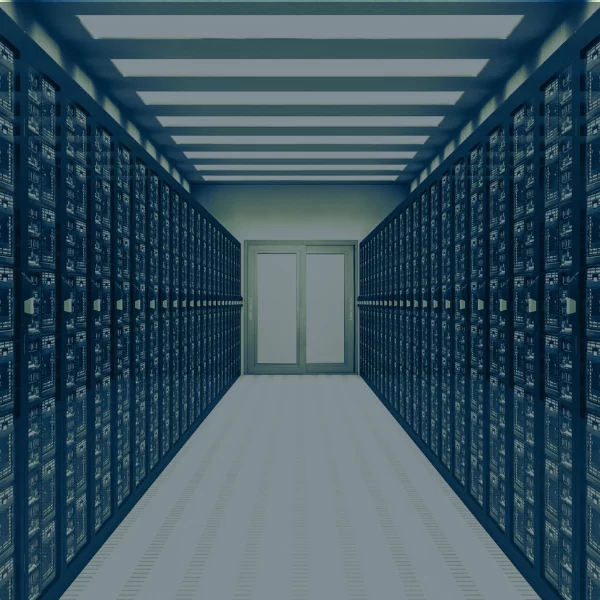
Artificial intelligence has intensified demand for digital storage infrastructure, and with that demand has come renewed attention to the facilities that make this technology possible: data centers. The global data center market in 2025 was valued at $383.8 billion and as AI grows and investments continue in this industry, the sector is expected to reach close to $1 trillion by early 2030. [1]
Ohio is at the forefront of this growth. As of 2026, Ohio has more than 200 data centers, making it the fifth-highest state in the country. [2] As society moves toward more advanced technology requiring higher data storage, the development of data centers will continue to rise at unprecedented levels to meet that demand.
For businesses, developers, municipalities, and utility providers, data center projects can present meaningful opportunities, but they also raise practical and regulatory questions that are different from those associated with more traditional commercial or industrial development projects. The projects that move most successfully from concept to construction are typically those that recognize these issues early and address them through thoughtful planning and collaboration.
The Backbone of the Internet
Data centers are the physical manifestation of the internet. While we often think of the internet as an invisible “cloud”, it really is a tangible network of data centers. These facilities house servers, networking systems, storage devices, and the supporting infrastructure necessary to keep that equipment operating reliably. [3]
Businesses and consumers alike depend on data centers daily. Whenever you use an application on your phone, send an email, or use the internet in general, you are relying on a data center to store and process that information. Although data centers are often associated with artificial intelligence and advanced computing, they are ultimately commercial real estate projects with unique operational requirements that set them apart from more conventional developments.
Core Infrastructure Demands
Not all data centers are alike. At the smaller end of the spectrum are modular data centers which are compact, portable facilities typically serving a single business or organization. At the largest end are hyperscale data centers, which are built to support artificial intelligence development. These facilities are massive and require lots of open land (the largest hyperscale data center currently exceeds 1.6 square miles). [4]
What distinguishes today’s data centers from traditional commercial developments, however, is not size alone, it is the extraordinary infrastructure required to sustain them.
In 2023, The Department of Energy (DOE) found that data centers accounted for approximately 4.4% of all US electricity used that year. [5] These facilities require a continuous power supply to run their computing equipment and generate substantial heat, necessitating cooling systems that can consume hundreds of thousands of gallons of water a year. As a result, reliable electrical service, adequate water access, and suitable land are critical considerations that must be addressed well before construction begins. As artificial intelligence continues to scale, these infrastructure demands are only expected to grow.
Local Collaboration Often Determines Success
At the federal level, regulation is focused less on the real estate development of data center facilities and more on adjacent issues related to energy usage and utility affordability. [6] However, many of the most important decisions regarding these facilities occur at the state and local level. States often regulate utility planning, tax incentives, and in some cases, environmental requirements. Municipal governments oversee zoning, land use, site plan approval, building permits, traffic studies, stormwater management, and public hearings. It is during that local review process that developers and the community have the greatest opportunity to work together to resolve issues before they become obstacles. As a result, developers, utility providers, government officials, and residents all play an important role in determining whether a project moves forward successfully.
In Northeast Ohio, several communities have recently reconsidered how existing zoning regulations apply to data center development. In some cases, municipalities have temporarily paused project approvals while evaluating whether existing ordinances adequately account for the demands these facilities place on local infrastructure. The result is a legal environment that is evolving quickly and unevenly, yet one that remains rich with opportunity.
The Value of Experienced Legal Counsel
Unlike conventional real estate projects, data center development demands careful navigation of interconnected legal, regulatory, and infrastructure considerations. Experienced legal counsel can assess feasibility, obtain zoning variances, negotiate utility agreements, and guide clients through each stage of the approval process.
For any stakeholder evaluating a data center project, engaging experienced legal guidance early can make the difference between a project that stalls and one that moves forward with community support. By building the right team at the start of the project, developers, landowners, and local governments can better ensure that a project is responsive to local needs and positioned to support long-term community well-being.
For more information or to seek counsel from our Real Estate & Construction group, please reach out to request a consultation or call us at 216-696-1422. McCarthy Lebit would like to thank law clerk Ayishat M. Adeniran for her work in assisting with the preparation of this legal blog post for The More Report.
_____
[1] HVAC & Construction Research Team, Data Center Market Size, Share & Trends Analysis Report, Grand View Research (July 2026), https://www.grandviewresearch.com/industry-analysis/data-center-market-report.
[2] Ohio Off. of Consumer Counsel, Quick Facts: Data Centers in Ohio, https://www.occ.ohio.gov/factsheet/quick-facts-data-centers-ohio.
[3] Data Centers and Their Energy Consumption: Frequently Asked Questions (2026), https://www.congress.gov/crs-product/R48646.
[4] Carla D. Walker and Ian Goldsmith, From Energy Use to Air Quality, the Many Ways Data Centers Affect US Communities, (February 17, 2026), https://www.wri.org/insights/us-data-center-growth-impacts.
[5] Data Centers and Their Energy Consumption: Frequently Asked Questions (2026), https://www.congress.gov/crs-product/R48646.
[6] Data Centers and Their Energy Consumption: Frequently Asked Questions (2026), https://www.congress.gov/crs-product/R48646.
This information is provided for general informational purposes only and should not be construed as legal advice. Readers should consult with qualified legal counsel regarding their specific circumstances before taking any action based on the information presented.
